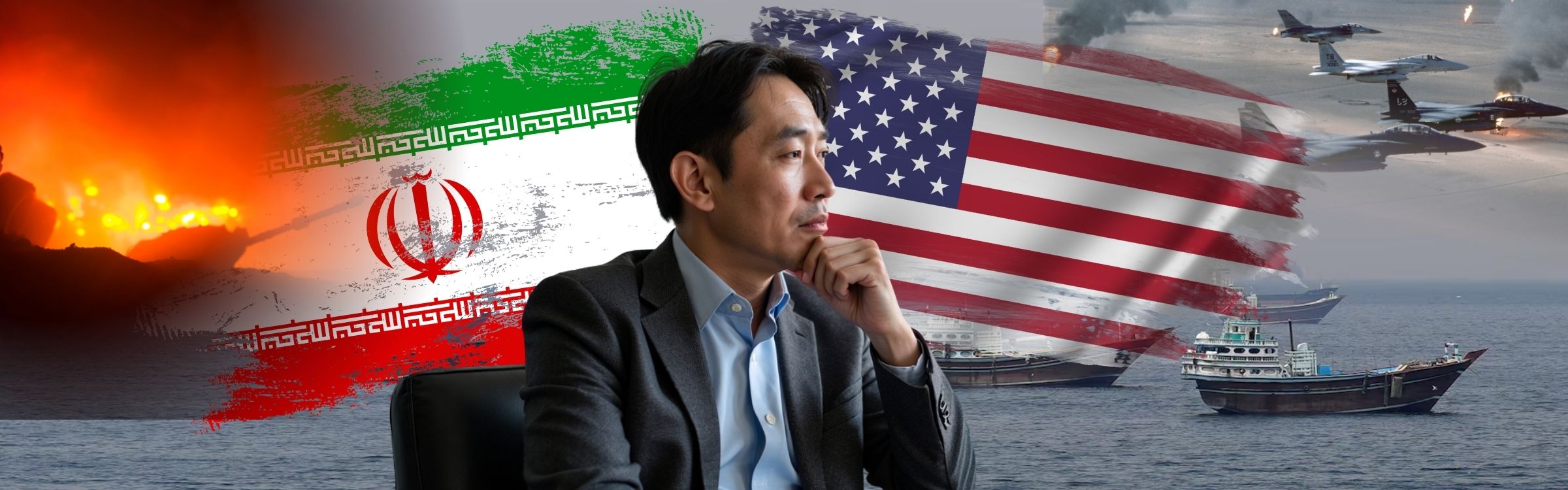
The disruption in the Strait of Hormuz is no longer a headline risk, it is feeding directly into how businesses across Thailand and Southeast Asia are operating day to day.
Since late February, when tensions involving the US, Israel and Iran escalated, global energy supply chains have tightened quickly. Roughly 20% of global oil supply typically moves through the Strait of Hormuz, which puts into perspective how quickly disruption there feeds into global cost structures. For Thailand, which sits deep inside regional manufacturing and trade networks, that pressure is now showing up in very practical ways. This is not something leaders are planning for, it is something they are already managing.
The operational reality has shifted quickly
Only a few weeks ago, most operations were running relatively smoothly. Today, the picture is more complicated.
Fuel costs are rising and beginning to affect margins. Certain components are harder to secure, slowing production lines. Fertiliser prices are increasing at a critical time for agriculture. Ports are becoming congested, with delays stretching into weeks, even where access has not been completely cut off. At one stage, more than 200 oil tankers were delayed or stranded, forcing carriers to reroute and adding significant time to already stretched delivery schedules.
The impact is broad rather than isolated. Retail is starting to feel stock pressure. Manufacturing is seeing margin compression. Logistics networks are having to adapt in real time. Energy costs are feeding into almost every part of the cost base.
For leadership teams, the challenge is not just recognising the issue, it is adjusting fast enough to stay ahead of it.
This is now a board-level conversation
What is notable is how quickly this has moved from an operational issue to a board-level priority.
Global trade is slowing, shipping rates are rising, and inflationary pressure is building again. Investment decisions are being revisited or delayed. The Thai baht is under pressure, and supply chain recovery is not straightforward, with knock-on effects around insurance, vessel availability and crew capacity.
Thailand is particularly exposed in this environment, importing over 85% of its crude oil, much of it from the Middle East. As a result, movements in global energy prices feed through quickly into the domestic economy. The Bank of Thailand has previously indicated that a $10 increase in oil prices can shave up to 0.3–0.5% off GDP growth, which quickly brings this from a supply chain issue into a broader economic concern.
Thailand came into 2026 still stabilising from previous disruptions. This adds another layer of complexity at a time when many businesses were already balancing recovery with longer-term investment into areas such as aviation, MRO and logistics infrastructure.
Boards are now looking for clear, executable plans over the next one to two quarters, not just long-term strategy.
Why interim leadership is coming into focus
In this kind of environment, it is not surprising that interim and fractional leadership is starting to come up more frequently in conversations across APAC.
The logic is fairly straightforward. When the situation is fluid, committing to permanent hires can feel premature, but doing nothing is not an option either.
Interim leaders sit in that gap. They allow businesses to bring in experienced capability quickly, deal with a specific set of challenges, and then step back out once the situation stabilises.
What matters in practice is speed and relevance. The ability to deploy someone quickly, without a lengthy search process, who has already navigated similar disruption before and can contribute from day one.
Typically, that support centres around a few key areas. Supply chain stabilisation, cost control and financial restructuring, and commercial decision-making under pressure. Just as importantly, it gives leadership teams flexibility at a time when committing to long-term structure is difficult.
“APAC's interim and fractional leadership scene may be smaller than Europe's right now, but that's exactly our opportunity. With growing regional networks, expanding talent pools, and flexible leadership gaining traction, interim execs are your fast track to turning this challenge into a breakthrough, leading with agility and emerging stronger than ever.”
Richard Jackson, Managing Partner, JacksonGrant Executive
When it actually makes sense
Interim leadership tends to become relevant in very specific scenarios, and we are seeing a number of them play out at the moment.
Where lean teams are suddenly under pressure, for example a regional logistics operation dealing with disruption across multiple markets, there is often a need for senior oversight without building out a full permanent structure.
In mid-sized organisations, there is also a structural challenge. A 200-person manufacturer may need C-suite level capability in the short term, but adding permanent headcount at that level during uncertainty is not always practical.
And in some cases, it is simply about targeted expertise. A finance function that needs to manage cost compression over the next 6 to 9 months does not necessarily require a long-term hire, but it does need the right level of experience immediately.
These are not unusual situations in Thailand or across APAC during periods of prolonged uncertainty, they tend to emerge consistently when disruption runs beyond the short term.
The window to act is now
Thailand still has strong fundamentals. Infrastructure, manufacturing depth, and its position within regional supply chains all support recovery over time.
But in the near term, outcomes will be shaped by how effectively businesses respond now.
Access to the right leadership, whether permanent or interim, is a key part of that. The organisations that move decisively tend to stabilise faster and position themselves better when conditions improve.
Those that wait often find themselves reacting rather than leading.